|
CONQUER ROAD
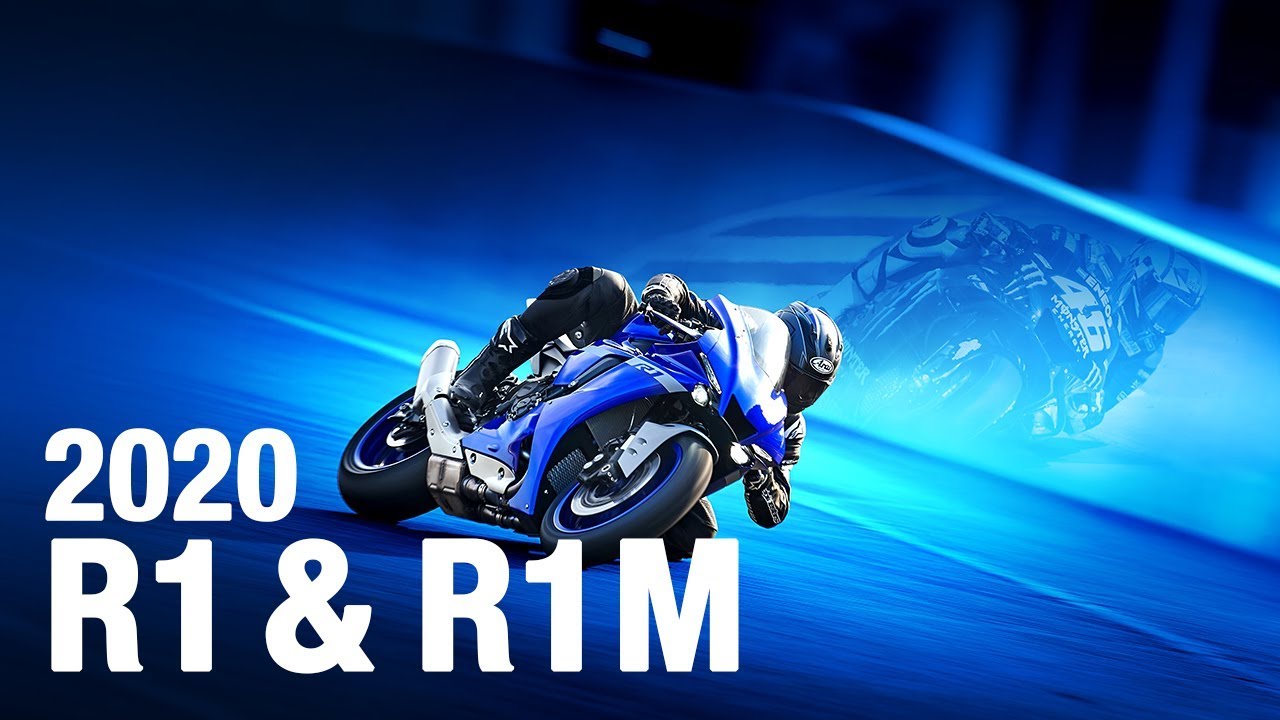
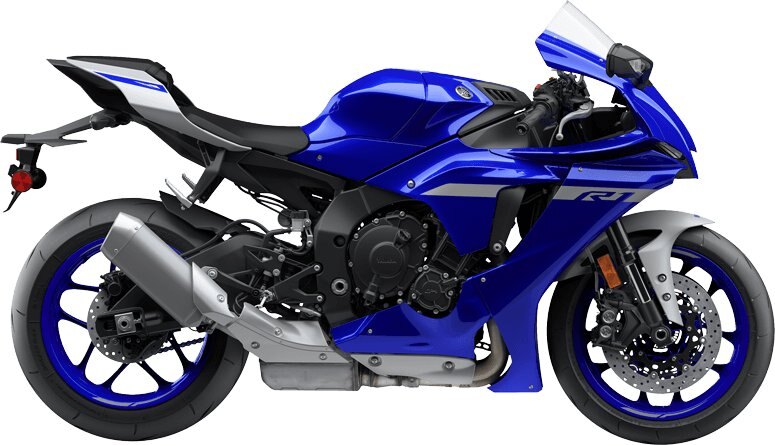
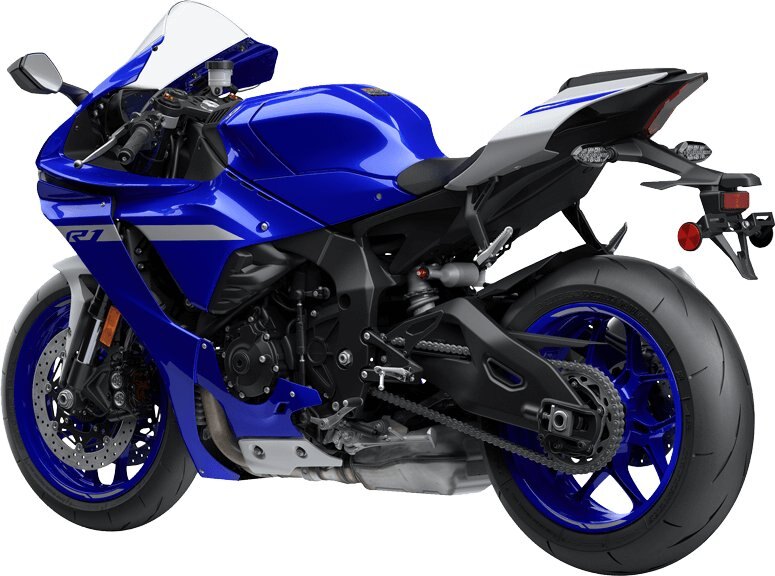
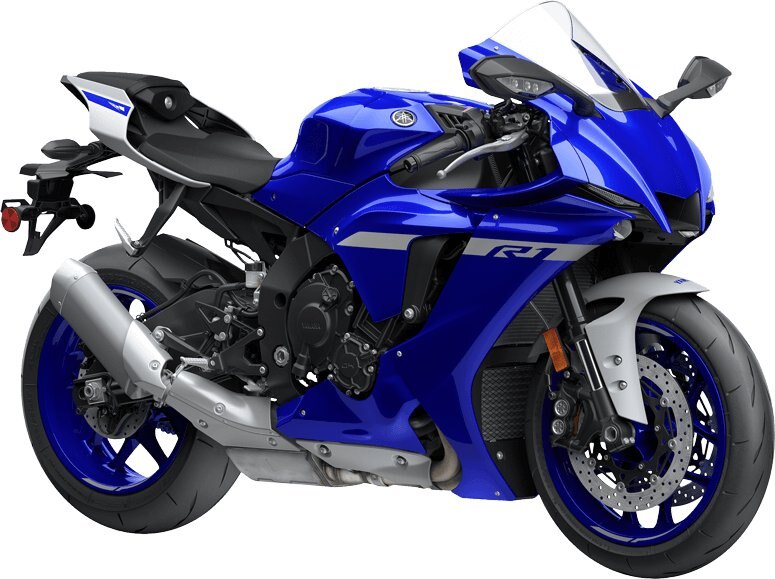
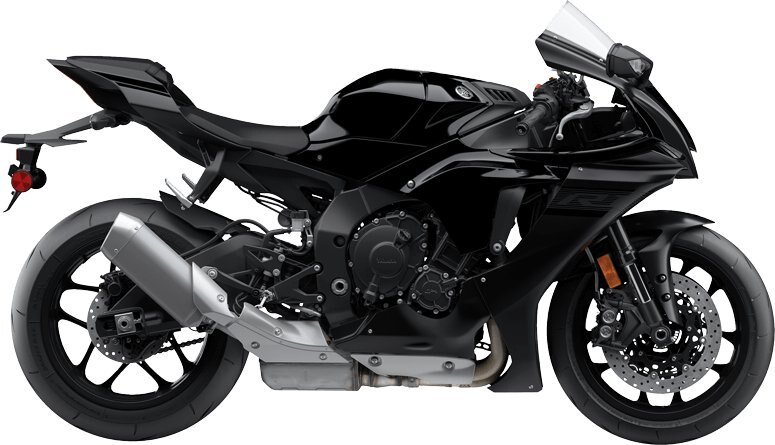
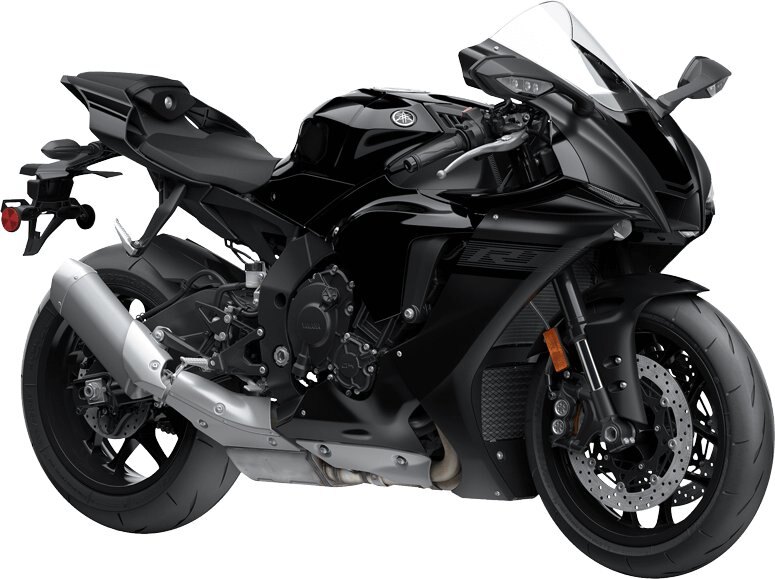
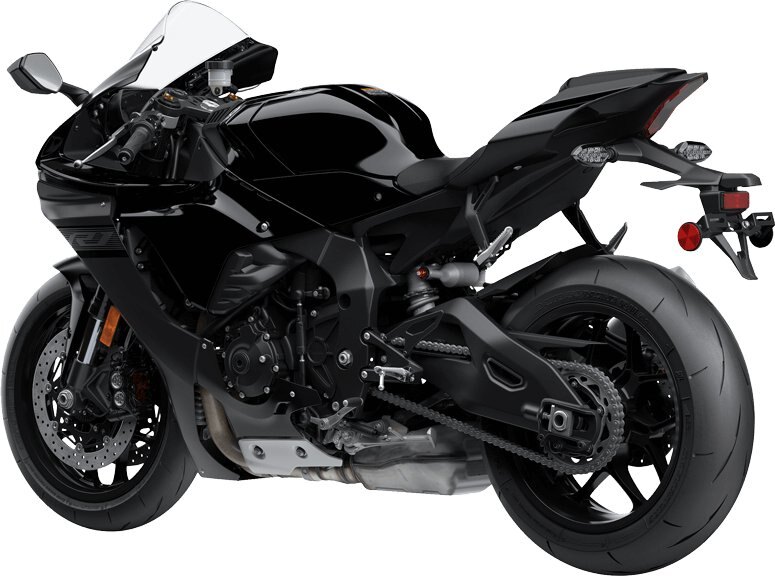
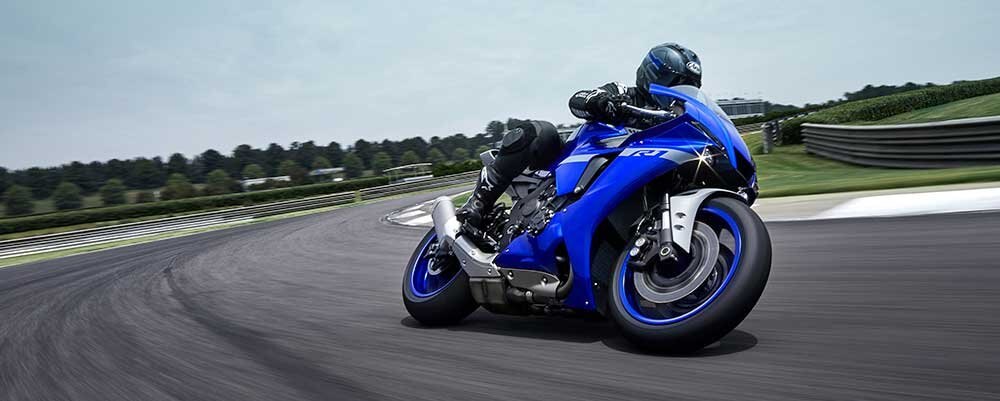
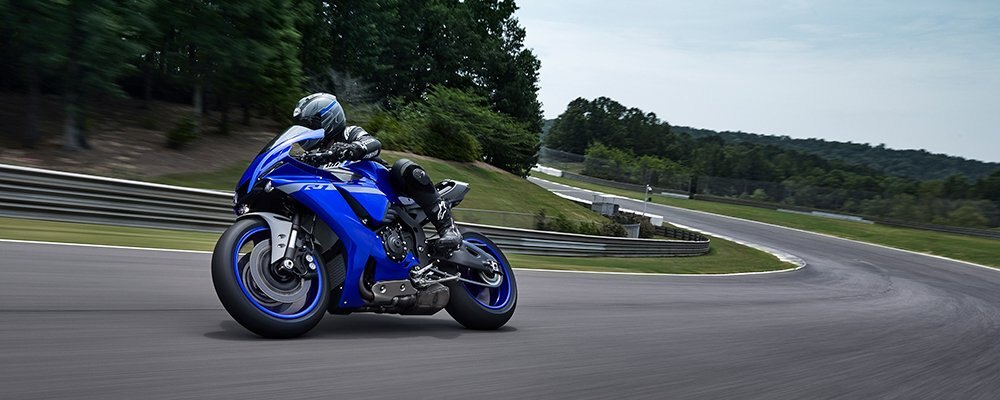
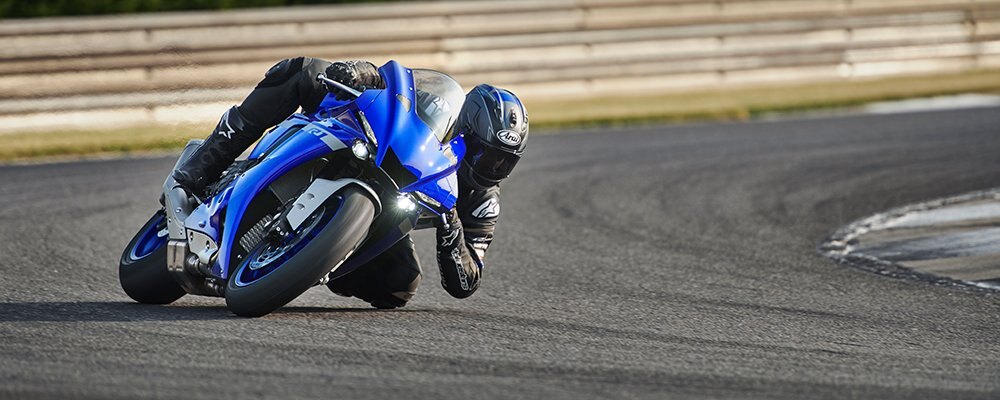
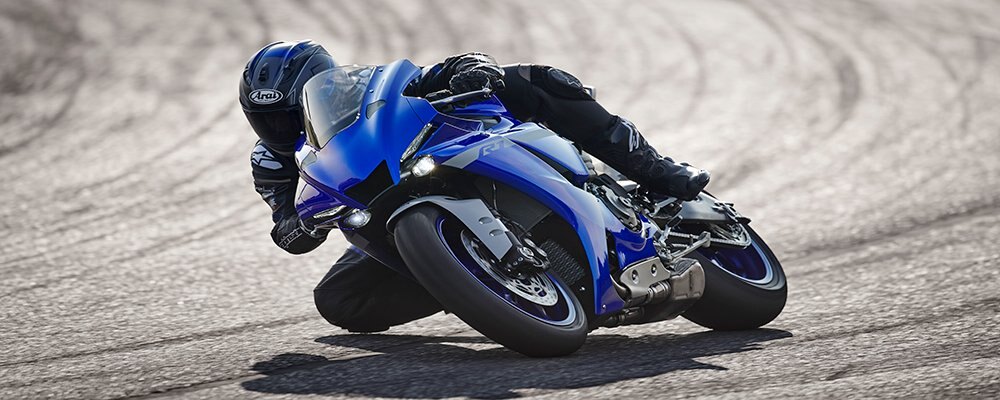
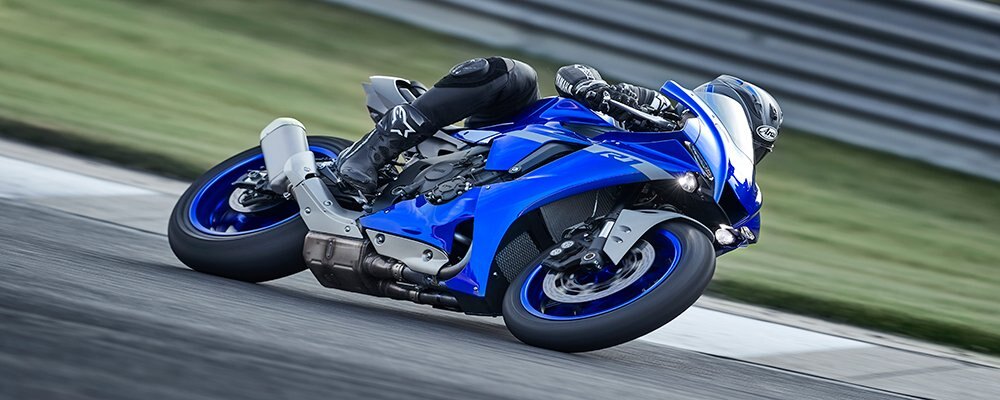
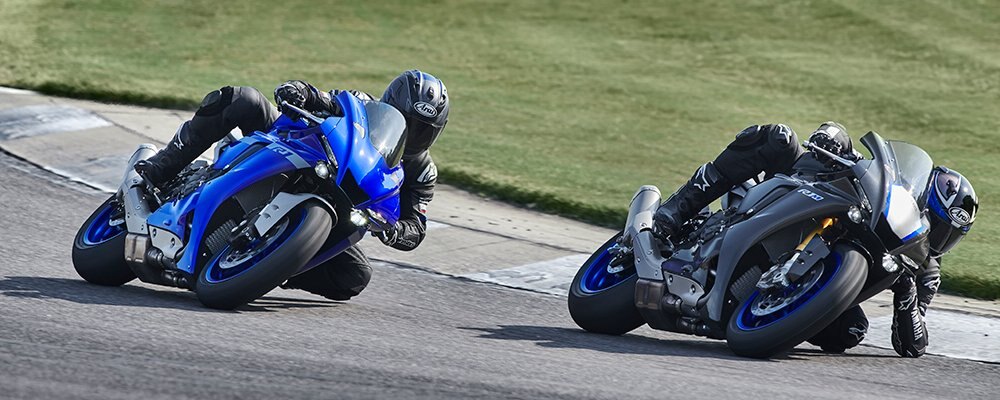
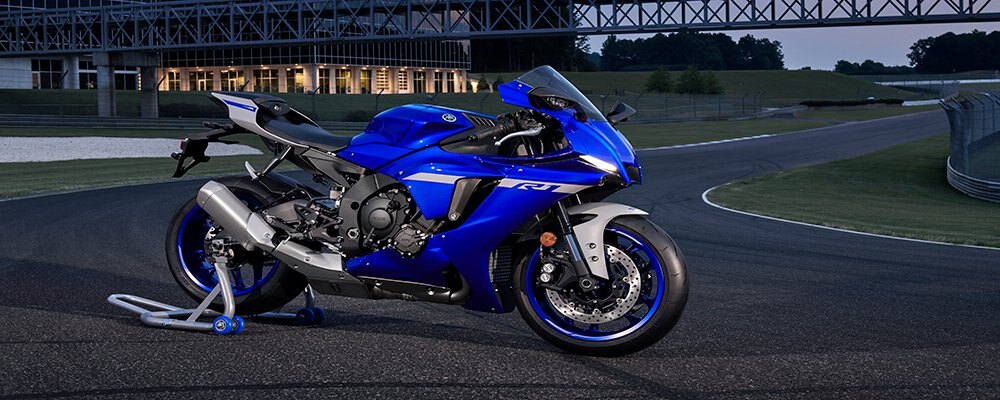
Yamaha has a rich heritage of building the most sought-after supersport motorcycles designed to deliver the pinnacle of performance on and off the track. The 2020 Yamaha R1 is forged from the technology and development gained from countless racetrack challenges, from MotoGP to the Canadian Superbike Championship. From crossplane crankshaft engines to revolutionary electronics such as the six-axis Inertial Measurement Unit (IMU), Yamaha's historical achievements have become the future of R World. |
REFINED CP4 ENGINE

The new 2020 R1 comes equipped with the next generation of Yamaha's unique 998 cc inline four-cylinder crossplane crankshaft (CP4) engine for refined performance. Returning features such as titanium fracture-split connecting rods and offset cylinders contribute to a responsive and potent character, while the cylinder head, fuel injectors, finger-follower rocker arms, and camshaft profiles are new for 2020. |
RACING PEDIGREE

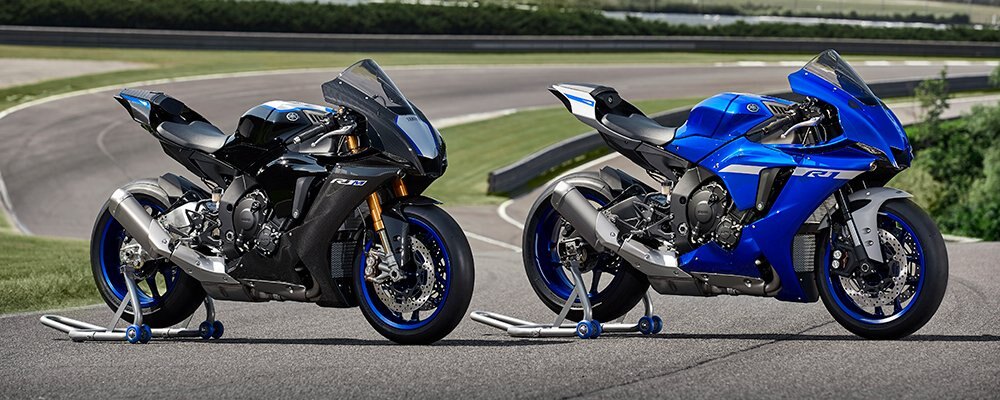
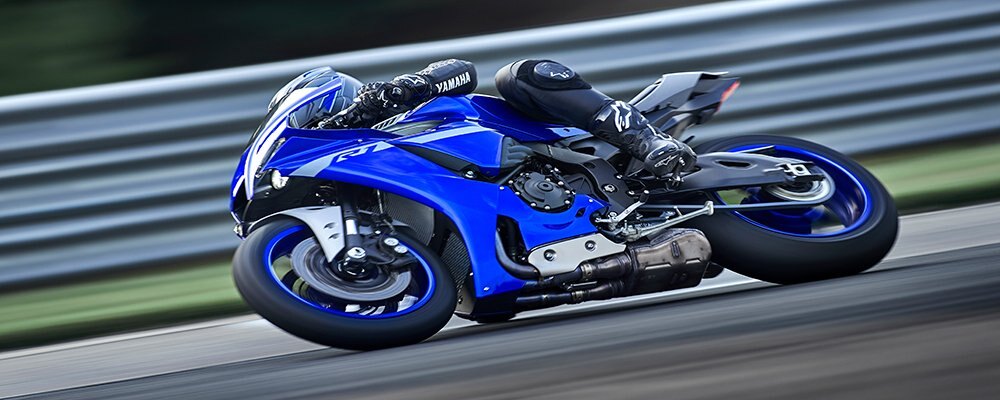
Based on 22 years of proven race-winning engineering, the 2020 Yamaha R1M and R1 are forged from the technology and development gained from countless challenges in MotoGP, World Superbike, and MotoAmerica Superbike races, and the grueling demands of Endurance World Championship racing. |
|
MULTIFUNCTION TFT SCREEN
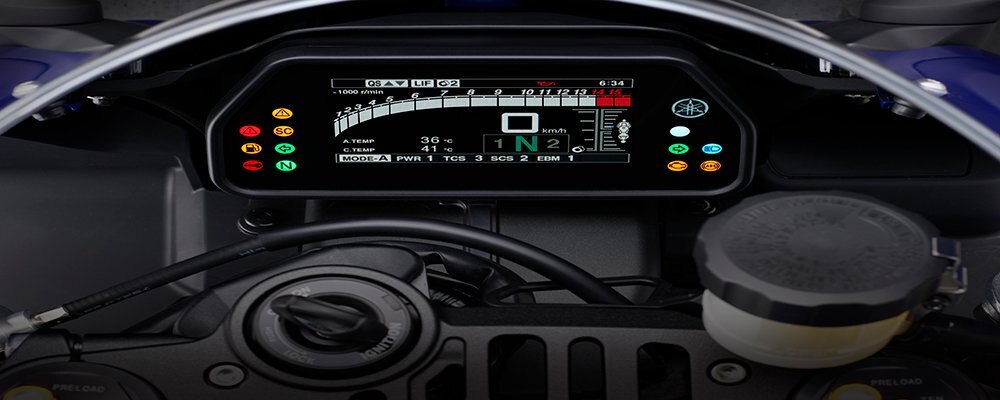
The R1 features a brilliant full-colour, thin-film transistor (TFT) instrument screen, with front brake pressure and fore/aft G-force readouts, giving the rider even more feedback from the machine. Choose either the street or track display mode, the latter of which focuses on performance information such as YRC settings (including new Engine Braking Management and Brake Control systems), a zoomed-in view of the tachometer in the upper rpm range, a lap timer, gear position indicator and speed.
 |
-
Ultra-lightweight, compact, 998cc, DOHC, 4-valve, liquid-cooled, in-line four-cylinder engine with "crossplane" style crankshaft.
- The key components of this cutting edge engine design are the "crossplane" crankshaft and an uneven firing order. Both of these features are used on Yamaha's race winning M1 MotoGP racer. The R1 crossplane crankshaft locates the center two rods at a 90 degree plane from the outer cylinders. Instead of the crank pins aligned on the same plane (a straight line drawn through the center of the crankshaft), they align on 2 planes in the form of a cross... or "crossplane". Working in conjunction with the crossplane crank is an uneven firing order. This R1 engine fires 1,3,2,4 cylinders and the firing intervals are uneven at 270 / 180/ 90 /180 degrees. What all this means to the rider is the most linear torque possible and amazing throttle control. This engine design allows a whole new level of rider - machine communication. One of the most important benefits is the outstanding cornering performance that exceptional throttle control allows.
- The key engineering goal for the R1 series is significant horsepower with excellent controllability, making the bike easier & more enjoyable to ride. The R1 is a "rider's machine".
-
4-valve cylinder head design.
- compact pent roof combustion chambers with 13:1 compression ratio
- lightweight 33 mm titanium intake valves & 26.5 mm steel exhaust valves
- 4-valve design optimizes breathing efficiency & overall engine performance
- combustion chambers are machined to ensure exact volume spec for maximum power
-
Special intake port shape provides maximum filling efficiency.
- port shape, valve placement & combustion chamber shape induce a tumbling effect of the inbound fuel - air charge that increases combustion speed, power & torque
-
"Finger follower rocker arms"
- reduces friction, allows greater valve lift & provides super accurate control of valve opening & closing at high rpms
- sliding area of the rocker arms feature a DLC (diamond like coating) to reduce friction & wear
- valve adjustment pads sit under the rocker arm
-
Valve adjustment intervals are every 42,000 kms.
-
High performance intake & exhaust cams.
-
Closed deck aluminum cylinder with "liner-less" ceramic composite plated cylinder bores.
- ceramic coating sprayed directly on the aluminum block, eliminating the liner & reducing weight
- excellent heat dissipation for consistent power delivery
- coating enhances the thin film of oil between the cylinder & piston, reducing friction & increasing power
- closed deck design allows cylinders to be spaced more closely together, reducing engine width
- cylinder is a stand-alone design (not integrated into the upper crank case)
-
Offset cylinder design.
- offsets cylinder block relative to the crankshaft (to the exhaust side) to reduce frictional losses between the piston &cylinder wall during the power stroke for improved power output
-
Short skirt, forged aluminum pistons.
- light weight design for fast throttle response
- piston features a box shaped "bridge box " on the underside for increased rigidity & durability
- special Defric coating on skirt to further reduce friction
- ring expansion tension is optimized to reduce frictional losses
- piston oil coolers spray oil at the underside of pistons & rods to reduce temperature
-
Crossplane crankshaft design.
- crank inertial moment has been engineered to achieve linear throttle response, strong acceleration & excellent cornering exit control
-
Super light, fracture split titanium connecting rods feature a "nut less" design.
- lower end "cap" of the rod is made from the same piece of material as the upper portion; the 2 pieces are "split" apart using a special process known as fracture splitting & then machined
- fracture splitting ensures true big end roundness & greater precision in con rod dimensions for excellent durability despite the high horsepower loads
- lightweight titanium design (60% lighter than a conventional steel con rod) reduces horsepower losses & provides faster throttle response
- fracture split "Ti" rods are a world's first to be used on a production motorcycle
-
Single axis balancer shaft.
-
Crankcases feature a "Tri-Axis" layout for the crank, main and drive axles.
- creates a more compact & shorter engine front to back
- shorter engine allows for optimum engine placement in the "sweet spot" of frame for desired weight distribution & great handling
-
Closed loop, 45 mm Mikuni throttle body fuel injection system with twin injectors.
- twin injector (primary & secondary) system is used on our MotoGP M1 race bike & YZF-R6
- primary injectors are located in the throttle bodies, secondary injectors located in the air box very near the computer controlled intake funnels
- both primary & secondary injectors utilizes 12 spray holes to maximize fuel atomization
- secondary injectors, located inside the air box, begin to function at mid rpms to redline
- "closed loop system" uses dual oxygen sensors to sniff spent exhaust gases & automatically adjusts the fuel / air ratio for reduced emissions
- fuel injection benefits include instant throttle response, choke-free starting, steady idle during warm up & reduced emissions
-
Yamaha Chip Control Throttle (YCC-T)
- YCC-T electronically controls throttle valves for outstanding throttle response & controllability
- system features Throttle Position Sensor (TPS) and D.C. motor driven throttle valves
- YCC-T system provides precise control of intake air volume for a smoother torque curve
- ECU that controls YCC-T is capable of responding to changes at a speed of 1000th of a second
-
Yamaha Chip Controlled Intake (YCC-I) system
- intake funnels / stacks vary in length between 2 pre-set positions depending on engine rpm
- electronic servo motor varies the funnels. The revolutionary YCC-I provides the best of both worlds... solid low rpm torque & power combined with an amazing high rpm rush. It takes only 0.3 of a second for the funnels to move from the tall to the short position
-
Compact 6-speed transmission.
- optimized gear ratios match engine output for maximum performance
-
Compact, lightweight slipper or back limiter clutch assembly with assist.
- reduces rear wheel hop when making down shifts under hard braking
- key benefit is reduced lap times & smoother control when participating in a race or track day
- assist function reduces clutch lever effort
-
Ram Air Induction System
- features centrally located intake duct between the LED headlights, delivering cool, "force-fed" air which pressures the air box & increases power output at higher speeds
- straight shot induction from centrally located fairing duct to air box without bends or turns
-
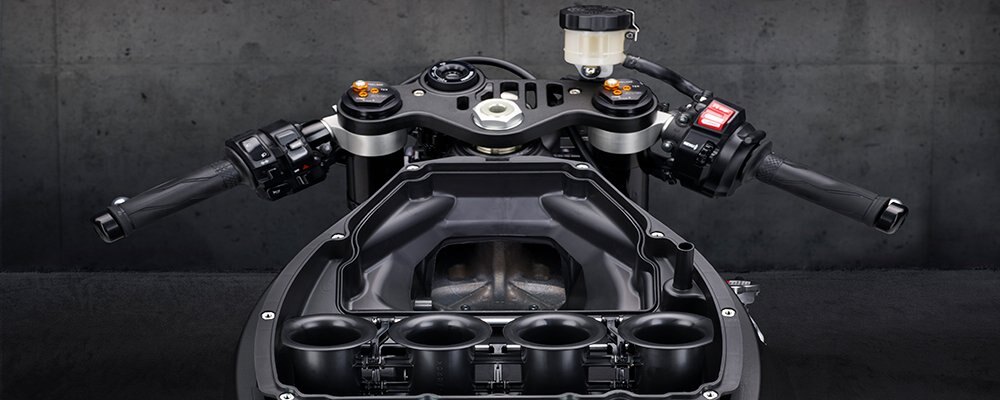
Large capacity 10.5 litre air box
- large capacity maximizes performance
- M1 inspired intake duct with solenoid valve reduces intake noise & improves high rpm power
- viscous type, high flow air filter is used
-
Mid ship design 4 into 2 into 1 exhaust system
- features lightweight titanium header pipes & muffler for reduced weight
- design maximizes power, reduces weight, centralizes mass & lowers the centre of gravity for fast, light, agile handling
- dual 3-way honeycomb catalyzers reduce exhaust emissions
-
Special exhaust valve device
- located in under engine chamber & features two separate exhaust flow routes based on rpm
- system allows a more compact muffler design that provides outstanding power output & torque characteristics while still providing sufficient silencing
-
Yamaha's EXUP System (Exhaust Ultimate Power Valve).
- part of the mid ship exhaust system
- utilizes a titanium body & butterfly valves that prevent the "blow back" phenomenon caused by "valve overlap"
- design reduces weight & maximizes cornering clearance
- EXUP system eliminates "flat spots" in the power band & reduces emissions
-
High-efficiency, high capacity curved radiator.
- curved rad provides more cooling surface area than a conventional flat rad
- ring-type fan provides increased airflow (and cooling) versus a standard cooling fan
-
Air-cooled oil cooler sits below the main rad to maintain stable lubricant temperatures.
-
Optimized wet sump lubrication system.
- features special oil routing to the big end rod bearings
- lightweight, deep design magnesium oil pan significantly reduces weight
- convenient spin-on type oil filter
-
Super lightweight magnesium cylinder head & crankcase covers secured by aluminum bolts.
- magnesium offers significant weight savings
-
Compact ACM (alternator) is mounted directly to the crankshaft.
- compact ACM uses rare earth magnets which produce more power for a given size than conventional magnets, therefore reducing size & weight
-
Maintenance-free transistor controlled ignition (TCI).
- produces a strong spark for fast starts
- provides precise ignition timing / mapping for optimum engine performance at all rpms
-
Direct ignition coils, iridium dual electrode spark plugs & high-output magneto.
- ignition coils integrated into plug caps, significantly reducing weight & complexity
|